On a Downtown Hoboken building, water can travel before it shows. We trace to the true entry point before anything on the roof gets patched.
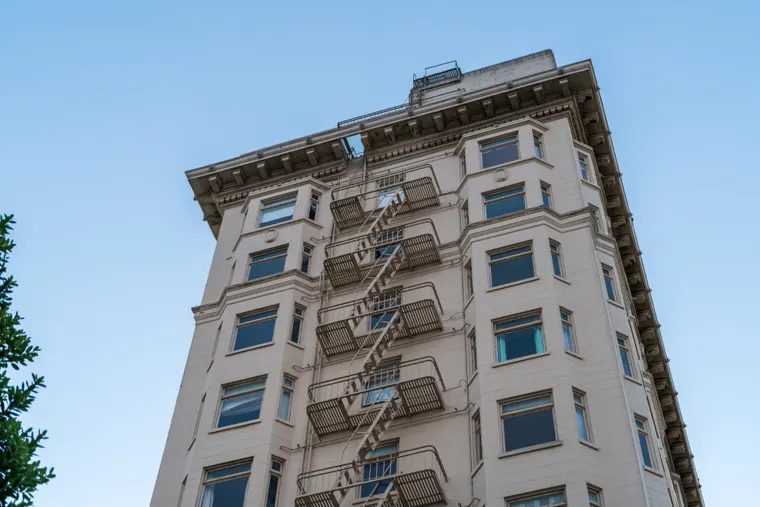
Downtown is the oldest part of Hoboken — brownstones and brick row houses built in the 1800s, one block from the river and a few minutes’ walk from Hoboken Terminal. Most roofs here are flat, built-up tar and gravel originally, re-covered in modified bitumen over the decades since.
A large share of Downtown sits inside the Southern Hoboken Historic District, which runs both sides of Washington Street from Observer Highway to 15th Street. Roof work that’s visible from the street — cornices, coping, the parapet line — can require historic review here, which we check before we ever quote a start date.
What we check first when a call comes in from this neighborhood.
Many Downtown row houses still have their original wood deck under a re-covered membrane. It shows its age at the parapet line first, not in the open field.
Coping, cornices and anything facing Washington Street can require sign-off before a permit is issued — we build that time into the schedule, not discover it mid-job.
Row houses share structure on both sides here. A leak on your top floor can start on a neighbouring roof, which changes who needs to fix what.
Rarely the open field of the membrane — almost always one of these.
Displaced or cracked coping is the single most common leak source on a Hoboken flat roof.
Where the membrane turns up a shared wall — a frequent failure point on row houses.
A clogged or settled drain finds its way in at the drain bowl itself.
Skylights, old chimney stubs, vents and mechanical curbs.
Age and thermal movement can open a seam years after installation.
On a shared party wall, water entering next door can surface on your side.
Same crew, same neighborhood knowledge, different scope.
We will come and look at it, then send a written estimate with photos and a clear scope. No obligation.
Prefer to talk? Call (551) 230-0252.
Not necessarily. Water follows the path of least resistance once it’s inside the roof assembly or a party wall, so it can travel before it shows up as a stain. We trace from the roof down to confirm the true entry point.
Yes, on a shared party wall this happens regularly in Hoboken. Water entering the roof next door can travel along the shared structure and show up on your side.
If the building sits inside the Southern Hoboken Historic District (both sides of Washington Street, Observer Highway to 15th Street) and the work is visible from the street — coping, cornices, the parapet line — yes, it typically needs review. We check this before quoting a start date so it isn’t a surprise partway through the job.
An inspection, photographs and a written estimate for your Downtown Hoboken building — at no cost and with no obligation.