Full tear-off to the deck, sound insulation, and the right membrane system for Downtown Hoboken’s building stock — quoted in writing before anything starts.
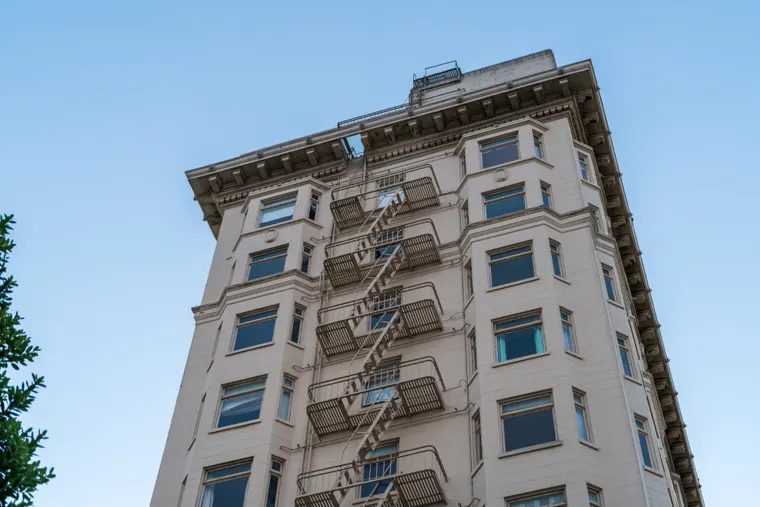
Downtown is the oldest part of Hoboken — brownstones and brick row houses built in the 1800s, one block from the river and a few minutes’ walk from Hoboken Terminal. Most roofs here are flat, built-up tar and gravel originally, re-covered in modified bitumen over the decades since.
A large share of Downtown sits inside the Southern Hoboken Historic District, which runs both sides of Washington Street from Observer Highway to 15th Street. Roof work that’s visible from the street — cornices, coping, the parapet line — can require historic review here, which we check before we ever quote a start date.
What we check first when a call comes in from this neighborhood.
Many Downtown row houses still have their original wood deck under a re-covered membrane. It shows its age at the parapet line first, not in the open field.
Coping, cornices and anything facing Washington Street can require sign-off before a permit is issued — we build that time into the schedule, not discover it mid-job.
Row houses share structure on both sides here. A leak on your top floor can start on a neighbouring roof, which changes who needs to fix what.
We recommend one system in writing, with the reasoning — not a menu to pick from blind.
| System | Best for | What to know |
|---|---|---|
| Modified Bitumen | Pre-1940 brownstones & row houses | The traditional match for older parapet roofs. Multi-ply, forgiving of an imperfect deck, easy to detail around old penetrations. |
| EPDM (rubber) | Walk-ups and mid-rise roofs with simple geometry | Single-ply rubber sheet. Excellent puncture and UV resistance, proven 20–30 year lifespan. |
| TPO | Roof decks, amenity space and equipment loads | White reflective single-ply, heat-welded seams. Lower rooftop temperatures, strong seam strength for foot traffic. |
Same crew, same neighborhood knowledge, different scope.
We will come and look at it, then send a written estimate with photos and a clear scope. No obligation.
Prefer to talk? Call (551) 230-0252.
It depends on roof size, deck condition, how many old layers have to come off, and access. We give you an exact written number after an on-site inspection at your Downtown Hoboken building, not a phone estimate.
A typical row house or small walk-up is two to four days in dry weather. Larger or mixed-use buildings run longer. Weather is the main variable because membrane cannot go down on a wet deck.
If the building sits inside the Southern Hoboken Historic District (both sides of Washington Street, Observer Highway to 15th Street) and the work is visible from the street — coping, cornices, the parapet line — yes, it typically needs review. We check this before quoting a start date so it isn’t a surprise partway through the job.
An inspection, photographs and a written estimate for your Downtown Hoboken building — at no cost and with no obligation.